Video-by-code tools, actually run and measured.
videobycode tests tools that generate video from code, and publishes what the runs actually produced
Comparisons, render costs, and working implementations for tools that generate video from code. Every number here comes from a run we performed, with tool version, operating system, and wall-clock render time recorded.
What a recorded run looks like
How we test- Tool
- ffmpeg 8.0.1 (libx264, aac; libfreetype=no)
- Wall clock
- 7,549 ms
- Output
- 1920×1080, 30 fps, 989,397 bytes
Runvbc-2026-08-09-ffmpeg-tpl30-001, measured 2026-08-09. Excerpt starts at 2s of the TPL-30 output; the clip is re-encoded to VP9 for the web and carries no audio track. Speed and colour are unchanged.
Latest
How we test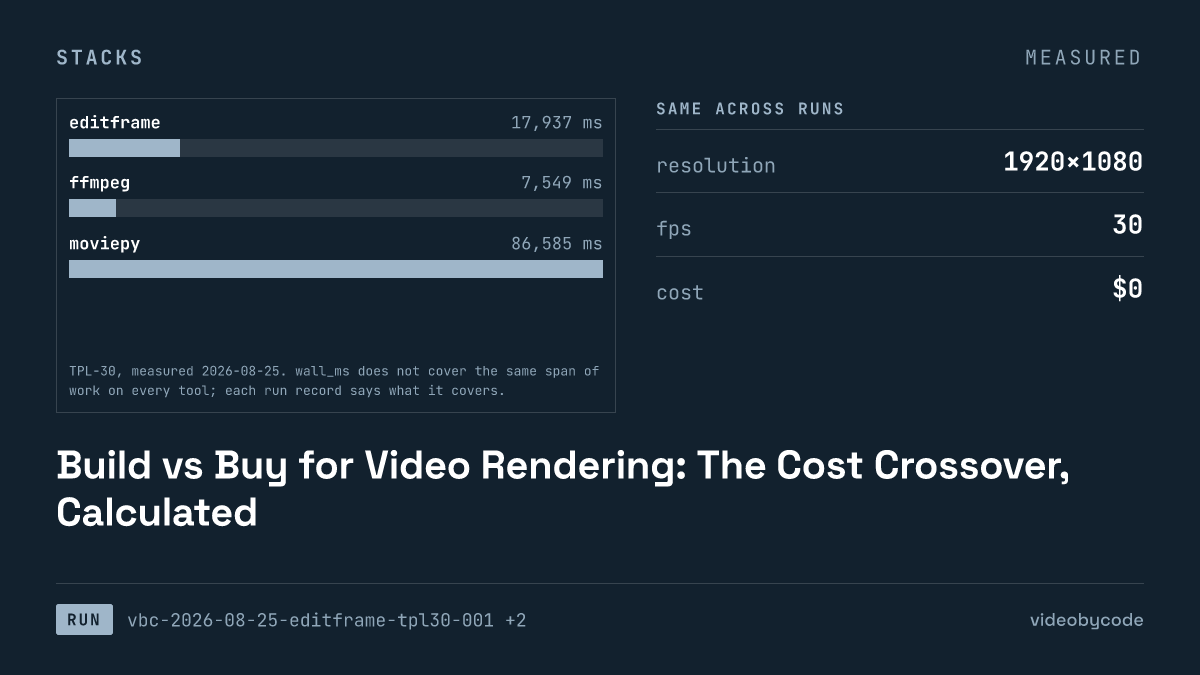
Build vs Buy for Video Rendering: The Cost Crossover, Calculated
Editframe, FFmpeg, MoviePy, and Remotion render the same TPL-30 template; the measured times and vendor prices show where self-hosting stops being free.
Latest
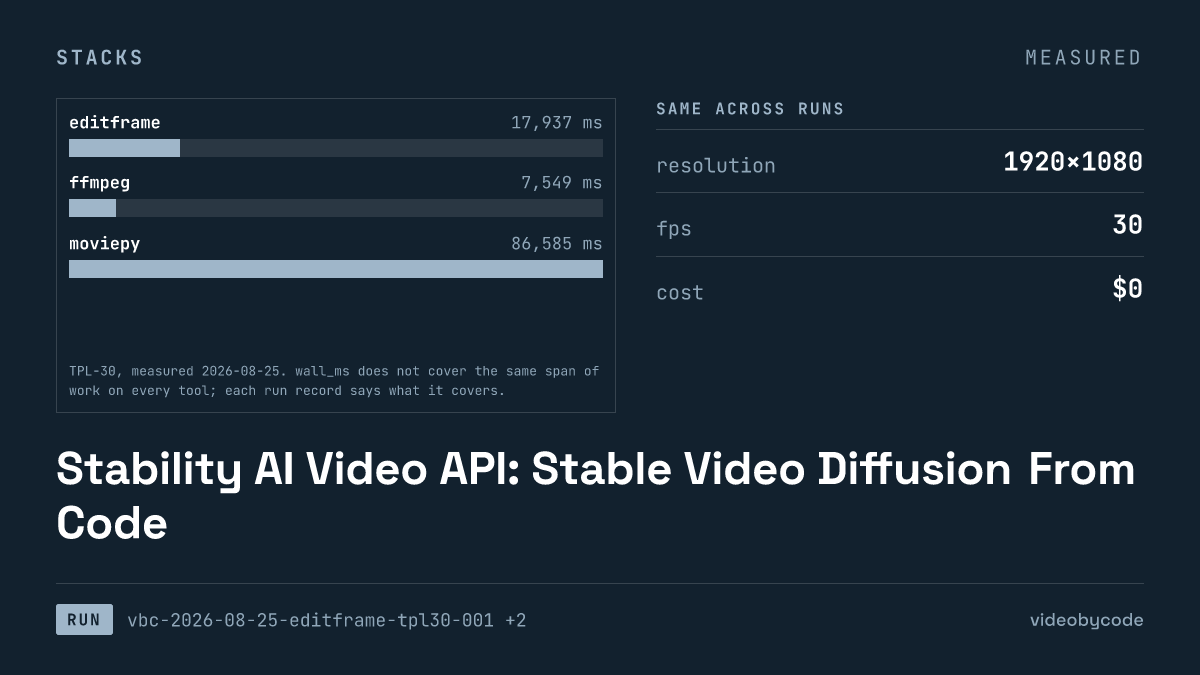
Stability AI Video API: Stable Video Diffusion From Code
Stability AI discontinued its Stable Video Diffusion API on 2025-07-24. Four compositing tools still render the same fixed benchmark today.
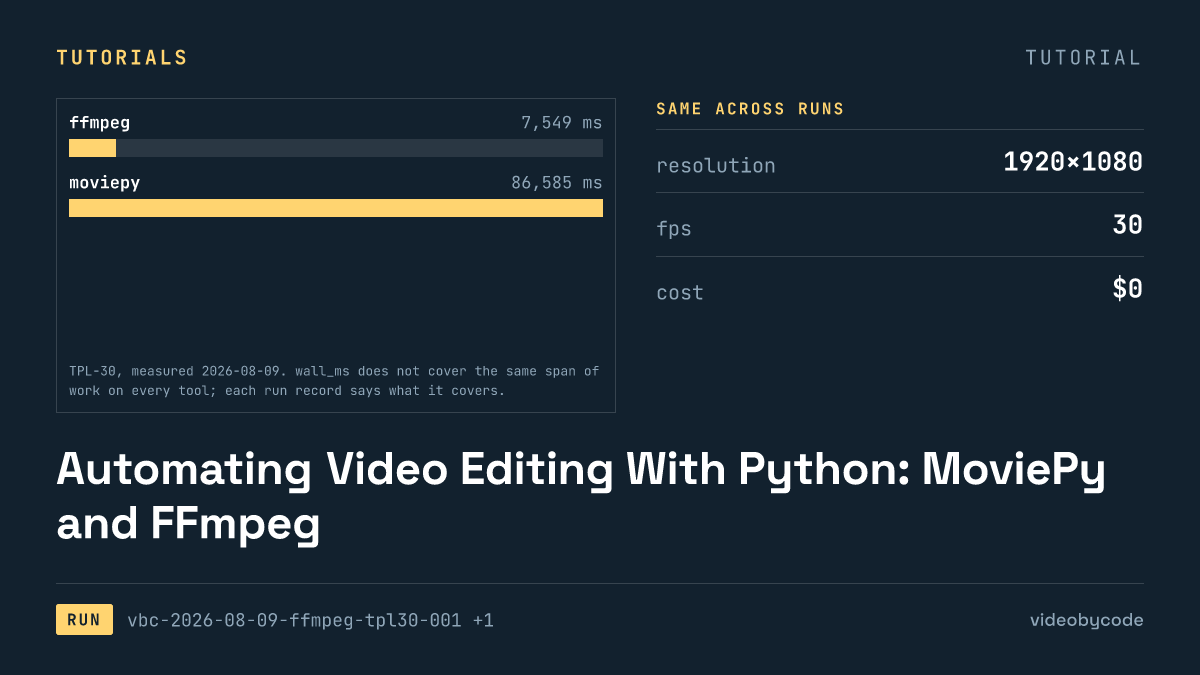
Automating Video Editing With Python: MoviePy and FFmpeg
FFmpeg and MoviePy render the same 1920×1080 TPL-30 template; the code, exact versions, and measured render time and output size are given below.
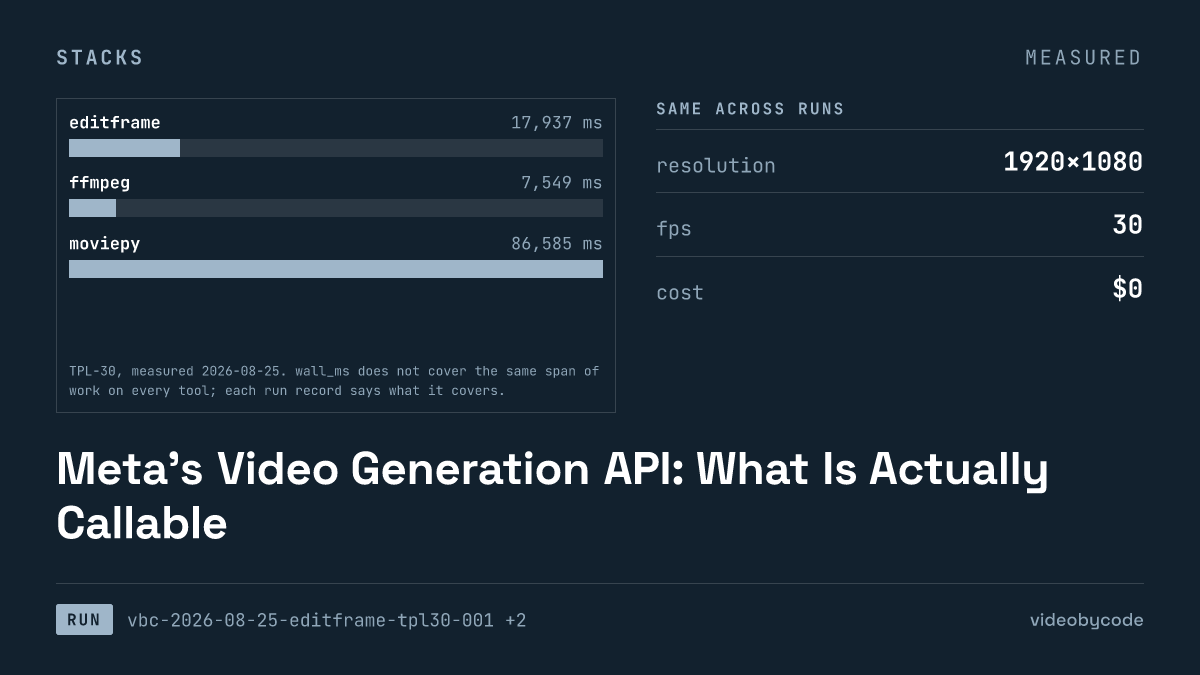
Meta's Video Generation API: What Is Actually Callable
Meta has not published a developer video generation API as of 2026-08-09; the vendor page describes consumer features, not a callable endpoint, key, or SDK.
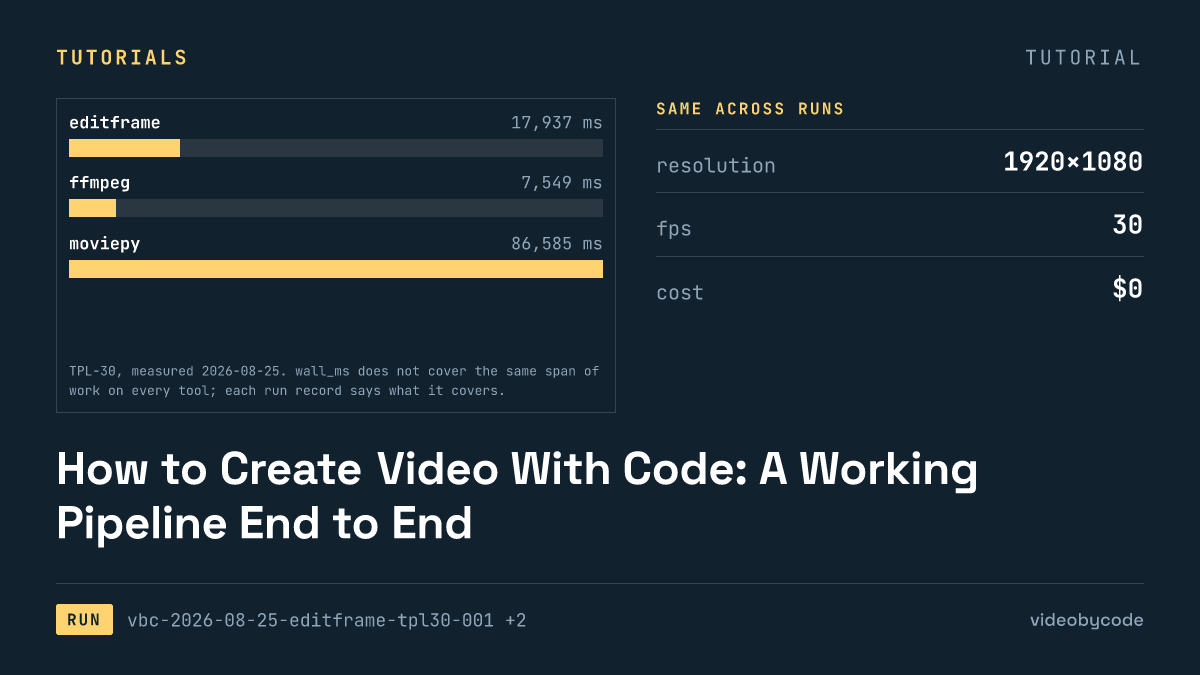
How to Create Video With Code: A Working Pipeline End to End
Editframe, FFmpeg, MoviePy and Remotion render the same TPL-30 template; render time, output size and cost are compared with linked evidence, not vendor claims.
What we publish
Tools placed side by side on one fixed set of criteria. The criteria, the scoring, and the version of each tool are stated before the first result.
What a render costs in practice. Figures come from jobs we ran, with the machine, the output settings, and the wall-clock time recorded next to the price.
One task, implemented end to end. Each article lists the versions used, shows the code that produced the output, and reports how long the run took.
How the pieces fit together: renderers, encoders, queues, and the glue between them. Written for people choosing what to build on.
Tutorials
See all Automating Video Editing With Python: MoviePy and FFmpeg
FFmpeg and MoviePy render the same 1920×1080 TPL-30 template; the code, exact versions, and measured render time and output size are given below.
How to Create Video With Code: A Working Pipeline End to End
Editframe, FFmpeg, MoviePy and Remotion render the same TPL-30 template; render time, output size and cost are compared with linked evidence, not vendor claims.
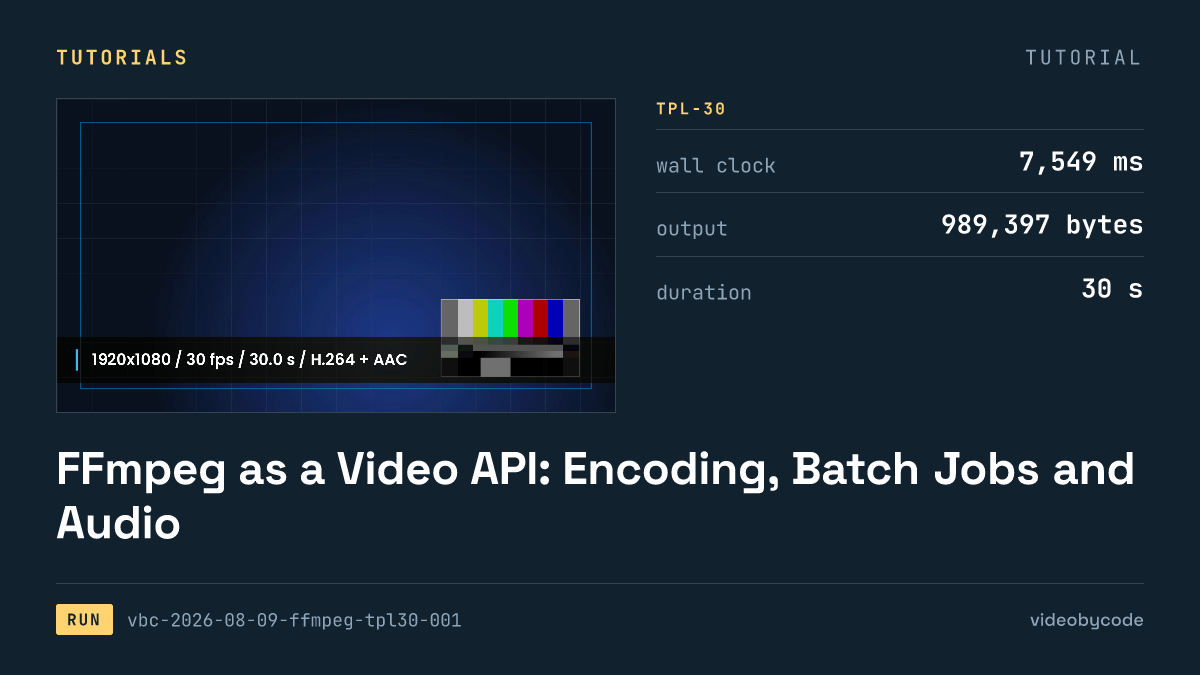
FFmpeg as a Video API: Encoding, Batch Jobs and Audio
FFmpeg's TPL-30 benchmark shows the exact script, versions and encode settings behind a scripted H.264 render, plus where drawtext and concat filters break.
Stacks
See all Stability AI Video API: Stable Video Diffusion From Code
Stability AI discontinued its Stable Video Diffusion API on 2025-07-24. Four compositing tools still render the same fixed benchmark today.
Meta's Video Generation API: What Is Actually Callable
Meta has not published a developer video generation API as of 2026-08-09; the vendor page describes consumer features, not a callable endpoint, key, or SDK.
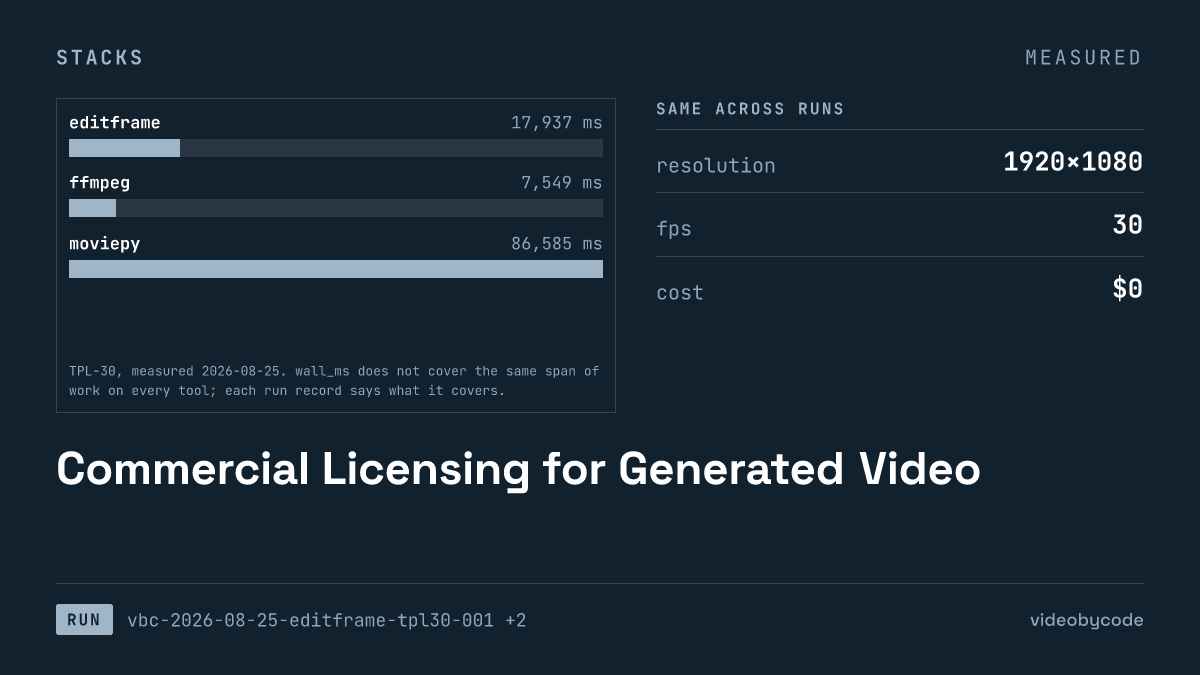
Commercial Licensing for Generated Video
Four render tools compared on license terms and TPL-30 benchmark data: Editframe, FFmpeg, MoviePy, and Remotion, with vendor pricing and measured wall time.
Recorded on every test
Editorial policyTool and version
The exact release we installed, so a result can be checked against the same build later.
Machine and OS
CPU, memory, and operating system. Render numbers mean nothing without the machine they came from.
Wall-clock render time
Measured end to end on the stated output settings, not the figure printed by the tool.
Attempts, including failures
How many runs it took and what broke on the way. Runs that never finished are reported too.
Article types
How we testMeasured
Numbers produced by running the tool ourselves, with the setup written down.
Tutorial
A task implemented step by step, with the code and the run time included.
Comparison
Tools scored on one fixed set of criteria, stated before the results.